
Tree Health Care Columbus OH — Diagnose, Treat, and Protect Your Trees
A tree does not have to fall to cost you money. Slow decline, spreading disease, and untreated pest infestation can destroy a mature tree over two to three seasons — turning a valuable landscape asset into an expensive removal. The problem is that most Columbus homeowners do not recognize the early warning signs. By the time the damage is obvious from the ground, the tree is often past the point where treatment can reverse it.
BuckeyeTree Pro provides professional tree health care services across Columbus and Franklin County. Our ISA certified arborists diagnose tree diseases, identify pest infestations, assess nutrient deficiencies, and apply targeted treatments — catching problems early when intervention is still effective.
📞 Call (614) 259-1714 — Call for an On-Site Diagnosis
Common Tree Health Problems in Columbus OH
Central Ohio’s climate, soil conditions, and tree species mix create a specific set of health threats that Columbus homeowners encounter regularly. Understanding what to look for helps you act before the damage becomes irreversible.
Emerald Ash Borer
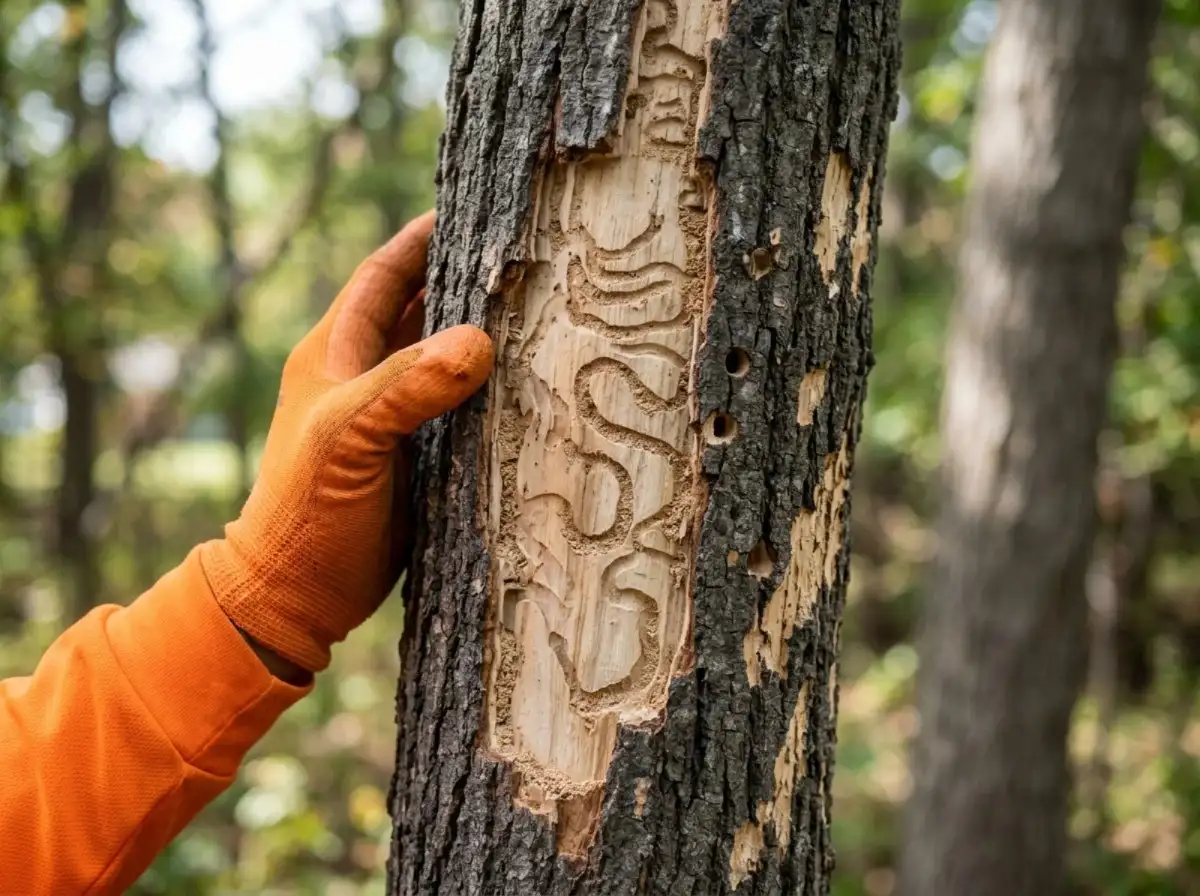
The emerald ash borer has been devastating Franklin County’s ash tree population since it was first detected in Ohio in 2003. This invasive beetle attacks all species of ash trees — boring into the bark and disrupting the tree’s vascular system until it can no longer transport water and nutrients. Early signs include thinning upper canopy, S-shaped galleries under the bark, and increased woodpecker activity. Untreated ash trees typically die within three to five years of infestation. Treatment with systemic insecticides is highly effective when applied before the tree has lost more than 30 to 40 percent of its canopy.
Oak Wilt
Oak wilt is a serious fungal disease affecting both red oaks and white oaks — two of Columbus’s most common and most valued landscape trees. Red oaks are particularly vulnerable, often dying within weeks of showing first symptoms. Signs include rapid wilting and browning of leaves from the top of the canopy downward, discoloration beneath the bark, and fungal mats under the bark in some cases. Oak wilt spreads through root grafts between neighboring trees and through sap-feeding beetles. Early diagnosis and treatment — including fungicide injection and root graft disruption — can save affected trees and prevent spread.
Anthracnose
Anthracnose is a fungal disease that affects many common Columbus tree species including sycamores, oaks, maples, and dogwoods. It causes irregular brown spots on leaves, premature leaf drop, and in severe cases, twig and branch dieback. While rarely fatal to otherwise healthy trees, repeated seasons of heavy anthracnose infection weaken the tree and make it more vulnerable to secondary problems. Fungicide treatments and cultural practices that reduce humidity in the canopy are effective management tools.
Verticillium Wilt
Verticillium wilt is a soil-borne fungal disease that affects maples, elms, and numerous other species common in Columbus. It causes sudden wilting of branches — often one side of the tree first — yellowing leaves, and streaked discoloration in the wood beneath the bark. Verticillium persists in the soil and cannot be eliminated, but affected trees can often be managed through proper fertilization, watering, and pruning to extend their life significantly.
Nutrient Deficiency and Soil Problems
Columbus soils vary significantly across Franklin County — from the heavy clay in older neighborhoods to the compacted fill soils common in newer developments. Nutrient deficiency, soil compaction, improper pH, and poor drainage all affect tree health in ways that mimic disease. Yellowing leaves, poor growth, and early leaf drop are common symptoms. Soil testing and targeted fertilization or amendment address these issues directly.
Scale Insects and Other Pests
Soft scale, oystershell scale, and spider mites are common pest problems on Columbus ornamental trees and shrubs. Heavy infestations cause yellowing, premature leaf drop, and branch dieback. Systemic insecticide treatments and horticultural oil applications are effective when timed correctly to the pest’s life cycle.
Concerned about your tree’s health? We will diagnose the problem.
📞 Call (614) 259-1714Our Tree Health Care Process in Columbus OH
Tree health care is diagnostic work before it is treatment work. Applying the wrong treatment to a misdiagnosed problem wastes money and time — and allows the actual problem to continue progressing. Our arborists identify the specific issue before recommending any treatment.
On-Site Diagnosis
Our ISA certified arborist visits your property and performs a thorough assessment — examining leaves, bark, branch structure, root collar, and soil conditions. We look for the specific patterns of symptoms that identify particular diseases, pests, and deficiencies. Where visual diagnosis is inconclusive, we collect samples for laboratory analysis.
Treatment Planning
Based on the diagnosis, we develop a targeted treatment plan — identifying the appropriate products, application methods, and timing. We explain the diagnosis and recommended treatment to you clearly before any application begins, including realistic expectations for treatment outcomes.
Treatment Application
We apply treatments using the appropriate method for each situation — systemic soil injection for vascular diseases and soil-applied pest treatments, trunk injection for targeted systemic delivery, foliar spray for surface fungal and pest issues, and soil amendment for nutrient and pH correction.
Follow-Up Assessment
Tree health treatments require monitoring. We schedule follow-up assessments to evaluate treatment response, adjust the program if needed, and confirm the tree is recovering as expected.
Real Project — Emerald Ash Borer Treatment in Gahanna OH
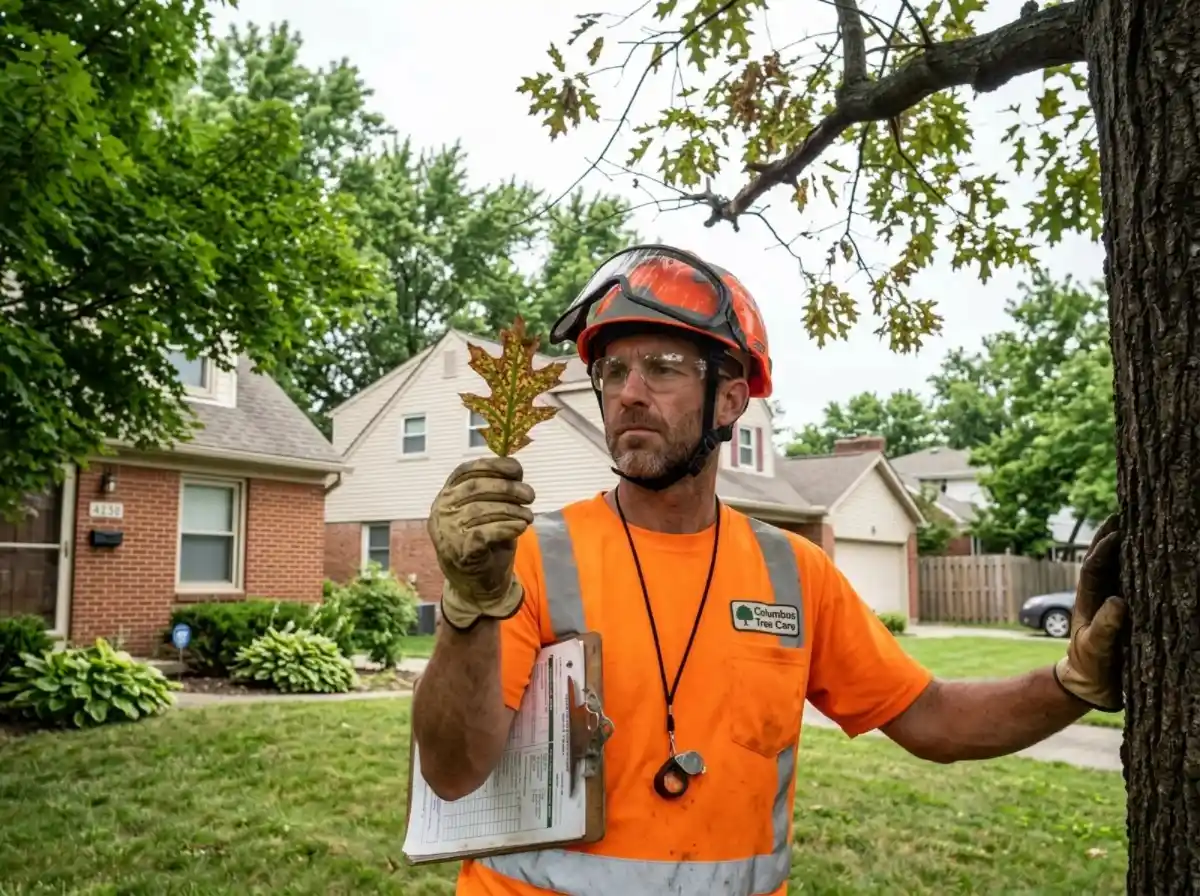
A homeowner in Gahanna had a large green ash tree — approximately 50 feet tall — showing early signs of emerald ash borer infestation. The upper canopy had begun thinning noticeably over the previous season and the homeowner had noticed increased woodpecker activity on the upper trunk. The tree was positioned to provide significant shade to their south-facing home and was valued by the homeowner.
Our arborist confirmed emerald ash borer infestation based on canopy symptoms and found S-shaped larval galleries under a section of loose bark on the upper trunk. The tree had lost approximately 20 percent of its canopy — within the treatment window. We applied a systemic emamectin benzoate trunk injection — the most effective treatment for established EAB infestation — with a two-year residual protection timeline.
At the follow-up assessment fourteen months later, the upper canopy had partially recovered with new healthy growth and no evidence of continued active infestation. The homeowner retained a 50-foot shade tree that would have cost significantly more to remove than the treatment. A second treatment application was scheduled to maintain protection.
Why Choose BuckeyeTree Pro for Tree Health Care in Columbus
We Diagnose Before We Treat
Some Columbus tree companies apply broad-spectrum treatments without a clear diagnosis. We do not. Every treatment recommendation follows a specific diagnosis — because the right treatment for the right problem is what actually works.
📞 Call (614) 259-1714 for tree health care across Columbus OH
Areas We Serve for Tree Health Care in Columbus OH
BuckeyeTree Pro provides tree health care throughout Columbus and Franklin County including Dublin, Westerville, Gahanna, Hilliard, Grove City, Upper Arlington, Worthington, Reynoldsburg, Pickerington, New Albany, Bexley, Powell, Canal Winchester, and Grandview Heights.
Frequently Asked Questions — Tree Health Care Columbus OH
Stressed trees and diseased trees often show similar symptoms — yellowing leaves, early leaf drop, branch dieback, and poor growth. The difference lies in the cause and the treatment. Stress from drought, compaction, or construction damage responds to cultural improvements. Disease and pest infestation require targeted treatment. Our arborist diagnoses the specific cause before recommending any intervention.
It depends on the disease, the severity, and how early the problem is identified. Emerald ash borer treatment is highly effective when applied before the tree has lost more than 30 to 40 percent of its canopy. Oak wilt can be managed in white oaks with early intervention. Some diseases — particularly those causing advanced decay or vascular failure — cannot be reversed. We give you an honest assessment of treatment potential before recommending any program.
The emerald ash borer is an invasive beetle from Asia that has devastated Ohio’s ash tree population since its discovery in 2003. It attacks all ash species by boring into the bark and destroying the tree’s vascular system. Franklin County has significant ash tree populations in both public and private landscapes. Effective treatments exist — but timing is critical. Call us at (614) 259-1714 if you have an ash tree showing canopy thinning or increased woodpecker activity.
It depends on the treatment and the condition being managed. Emerald ash borer treatments provide two-year protection per application. Fungicide programs for oak wilt or anthracnose may require annual application during high-risk periods. Fertilization programs are typically annual or biennial. Our arborist designs a program schedule based on your specific trees and their needs.
For trees in established landscapes with compacted soil, construction-affected root zones, or visible nutrient deficiency symptoms, targeted fertilization produces measurable improvement in vigor and canopy density. Healthy trees in undisturbed soil with good organic matter may not benefit significantly. Our arborist assesses each tree’s situation and recommends fertilization only when it addresses a specific identified need.
Call us immediately at (614) 259-1714. Oak wilt spreads rapidly — particularly in red oaks — and moves through root grafts to neighboring trees. Early diagnosis and prompt action are critical. Do not prune or wound an oak between April and July when the sap-feeding beetles that spread oak wilt are most active.
📞 Ready to schedule? Call BuckeyeTree Pro at (614) 259-1714
Protect Your Trees Before the Damage Is Done — Call BuckeyeTree Pro
Tree health problems caught early are manageable. The same problems identified a season or two later often mean removal. BuckeyeTree Pro serves all of Columbus and Franklin County with accurate diagnosis, targeted treatment, and honest guidance on what is worth treating and what is not.
Also see our related services: Tree Risk Assessment Columbus OH | Tree Pruning Columbus OH | Deadwooding Columbus OH | Tree Removal Columbus OH
📞 BuckeyeTree Pro — Tree Health Care Columbus OH — Call (614) 259-1714
Ready to Protect Your Trees?
BuckeyeTree Pro — 4466 Morse Rd, Columbus, OH 43230
📞 Call (614) 259-1714 Now