
Deadwooding Columbus OH — Remove Hidden Hazards Before They Fall
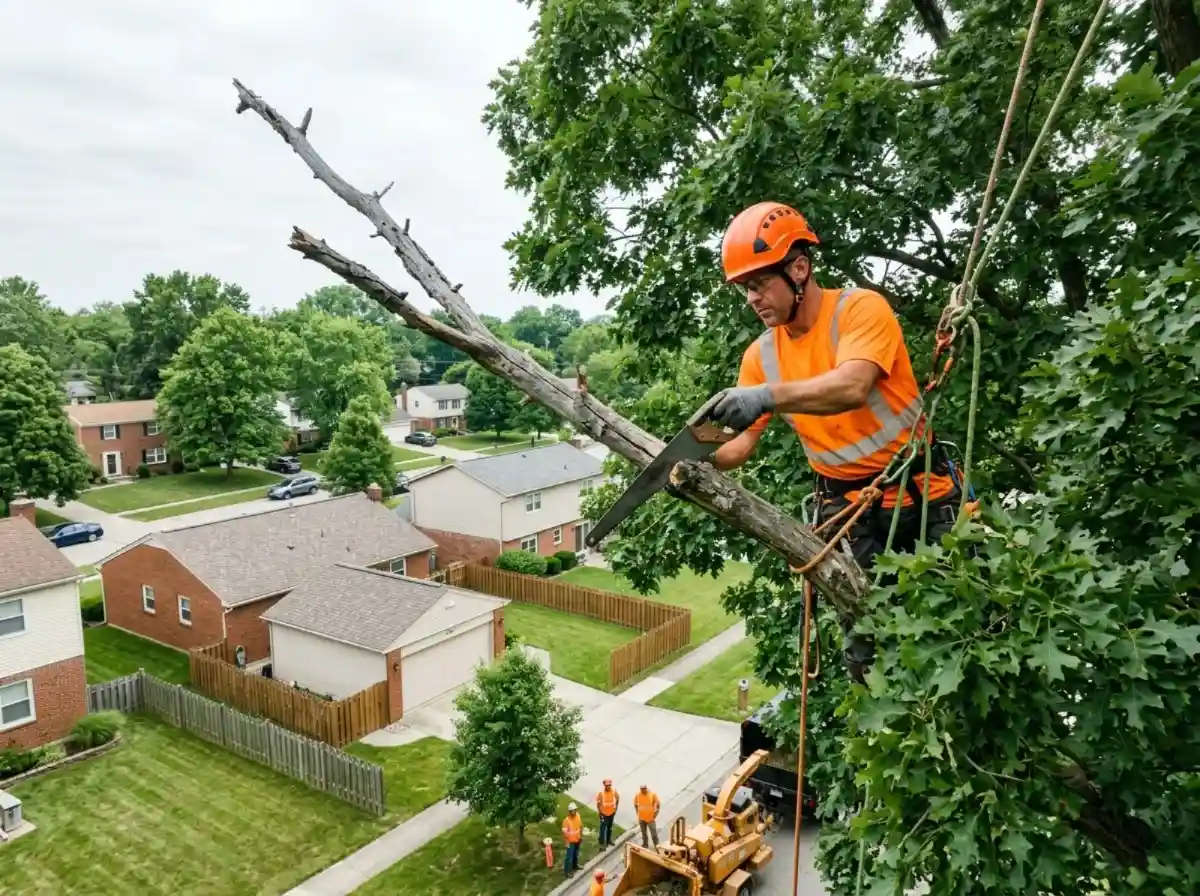
Dead branches hiding inside a tree’s canopy are one of the most overlooked hazards in Columbus yards. From the ground, your tree may look completely healthy — full canopy, green leaves, no obvious problems. But inside that canopy, dead branches are accumulating weight, drying out, and losing structural integrity with every passing season. When they finally let go — during a storm, during a calm summer evening, or under the weight of winter ice — they do not give warning.
BuckeyeTree Pro provides professional deadwooding services across Columbus and Franklin County. Our ISA certified arborists identify and remove every dead, dying, and structurally compromised branch from your tree’s canopy — eliminating the hazard completely before it becomes an emergency.
📞 Call (614) 259-1714 — Same Day Service Available
Why Dead Branches Are More Dangerous Than They Look
Dead Branches Fall Without Warning
A living branch bends under wind load and recovers. A dead branch is brittle — it snaps. And unlike living branches that show signs of stress before failing, dead branches give no visible warning before they let go. The branch that falls on your car, your fence, or a family member in the backyard was not bending dramatically in the wind beforehand. It simply broke.
Dead Wood Attracts Pests
Decaying wood inside a tree’s canopy is an ideal habitat for carpenter ants, termites, and wood-boring beetles — all common in Franklin County. These insects do not stay in the dead wood. They move into adjacent living tissue, accelerating the tree’s decline and eventually compromising its structural integrity from within.
Dead Branches Spread Disease
Fungal disease spreads through dead wood and into living tissue at branch unions. A single dead branch with active fungal infection can introduce disease into an otherwise healthy tree. Early removal stops the spread before it reaches the main stem or root system.
Dead Wood Adds Unnecessary Weight
Accumulated deadwood adds significant weight to a tree’s canopy — weight that serves no functional purpose for the tree and increases the load on living branches and the trunk during storm events. Removing it reduces mechanical stress and improves the tree’s overall wind resistance.
Dead Branches Mask Larger Structural Problems
Deadwood in the upper canopy is often the first visible sign of deeper problems — root damage, soil compaction, disease in the main stem, or girdling roots at the base. Our arborists assess the full tree during deadwooding and flag any underlying issues that need attention.
Worried about dead branches in your trees?
📞 Call (614) 259-1714Our Deadwooding Process in Columbus OH
Deadwooding sounds simple — find the dead branches and cut them out. In practice, thorough deadwooding of a large Columbus hardwood requires climbing into the canopy, working systematically through every major branch, and distinguishing between dead wood, dying wood, and structurally compromised living branches that need to come out.
Columbus trees accumulate deadwood at different rates depending on species and location. White oaks and red oaks in older neighborhoods like Bexley and German Village develop deadwood slowly but in large, heavy sections. Silver maples — found in nearly every Columbus neighborhood — develop fine deadwood throughout the inner canopy that accumulates over several seasons. Both require different approaches and different equipment to address thoroughly.
Full Canopy Assessment
Our ISA certified arborist assesses the tree from the ground and, where necessary, from within the canopy to identify all dead, dying, and structurally compromised branches. We assess branch size, location, weight, and the condition of the attachment point at the trunk or parent branch.
Systematic Dead Branch Removal
Working through the canopy systematically, we remove all identified dead and dying branches — making clean cuts at the proper branch collar location to allow the tree to seal the wound efficiently. We do not leave stubs. Stubs prevent proper wound closure and create ongoing decay entry points.
Structural Assessment During Removal
While working through the canopy, our arborists assess the living structure for any additional concerns — narrow branch attachments, crossing branches, signs of disease or pest activity, and areas of the canopy that may need follow-up pruning. We flag these findings and discuss them with you after the work is complete.
Complete Cleanup
All removed deadwood is chipped or hauled away. Your yard is left clean with no debris remaining.
Real Project — Oak Deadwooding in Bexley OH
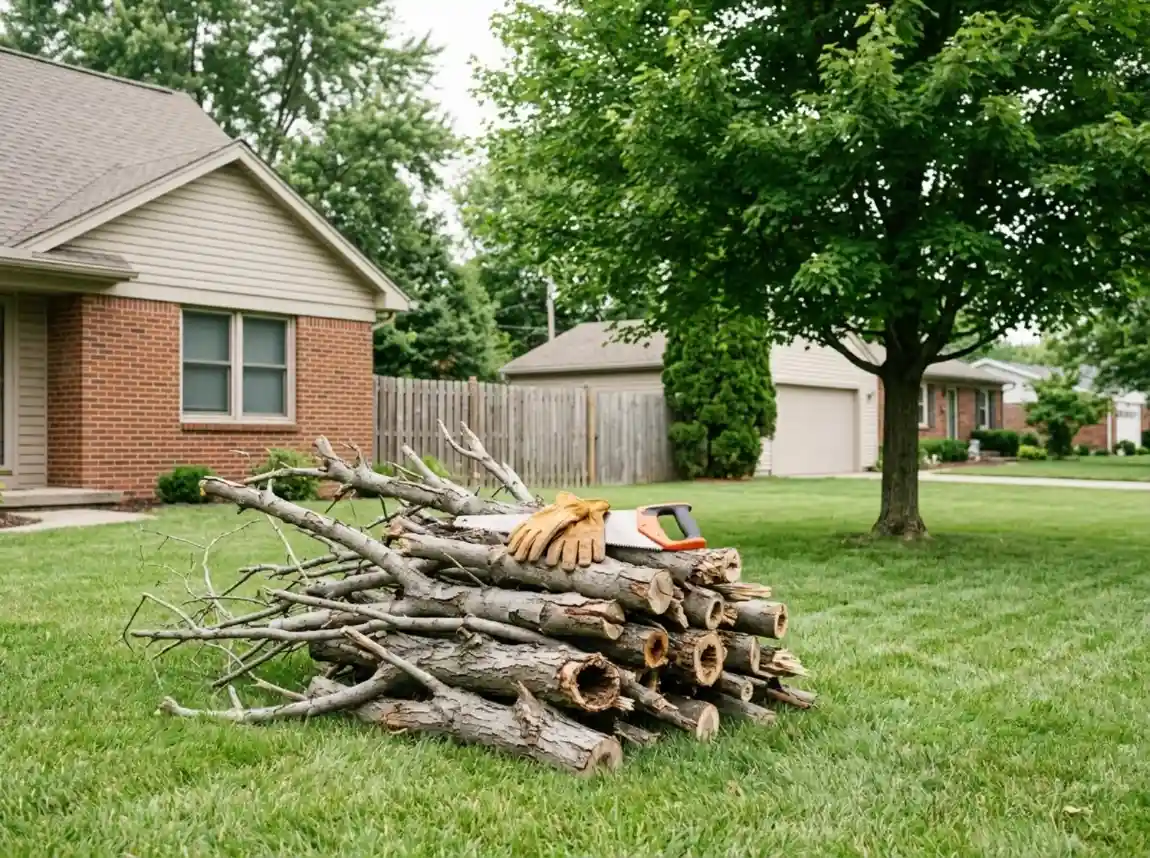
A homeowner on Drexel Avenue in Bexley had a large white oak with significant deadwood accumulation in the upper canopy — visible from the ground as dry, barkless sections throughout the top third of the tree. The tree was otherwise structurally sound with a healthy lower canopy, but the dead sections had been accumulating for several years and several large pieces were positioned directly over the home’s rear deck.
Our arborist climbed the tree and worked systematically through the upper canopy, removing fourteen significant dead sections ranging from two to eight inches in diameter. Several had begun to show carpenter ant activity at the base of the dead wood — we removed these completely and assessed the adjacent living tissue for spread. The remaining canopy was assessed for structural concerns and two crossing branches in the mid-canopy were removed as a precaution.
The deck hazard was eliminated completely. The carpenter ant activity was stopped before it reached living tissue. The tree’s overall canopy health improved visibly the following growing season. A job that took four hours prevented what could have been a significant structural damage event.
Why Choose BuckeyeTree Pro for Deadwooding in Columbus
Deadwooding Is Prevention, Not Maintenance
Most Columbus homeowners think of deadwooding as routine maintenance. It is more accurately described as hazard prevention. The cost of removing dead branches from your tree’s canopy is a fraction of the cost of repairing what those branches can damage when they fall. Our arborists approach every deadwooding job with that perspective — identifying and eliminating every meaningful hazard in the canopy.
📞 Call (614) 259-1714 for professional deadwooding across Columbus OH
Areas We Serve for Deadwooding in Columbus OH
BuckeyeTree Pro provides deadwooding services throughout Columbus and Franklin County including Dublin, Westerville, Gahanna, Hilliard, Grove City, Upper Arlington, Worthington, Reynoldsburg, Pickerington, New Albany, Bexley, Powell, Canal Winchester, and Grandview Heights.
Frequently Asked Questions — Deadwooding Columbus OH
From the ground, look for branches with no leaves during the growing season, dry or barkless sections in the canopy, branches that appear bleached or gray compared to surrounding wood, and any sections that appear to be hanging at an unusual angle. However, not all deadwood is visible from the ground — our arborists identify dead branches throughout the canopy during assessment, including sections only visible from within the tree.
Most Columbus trees benefit from a deadwooding assessment every two to three years. Fast-growing species like silver maples and cottonwoods may accumulate deadwood more quickly. Trees near structures, over decks, or in high-traffic areas benefit from annual assessment given the consequences if dead branches fall.
Deadwooding is a specific component of pruning — focused exclusively on removing dead, dying, and structurally compromised branches. A full tree pruning service may include deadwooding plus additional structural or aesthetic work. Our arborist will assess your tree and recommend whether deadwooding alone addresses your needs or whether broader pruning is appropriate.
Deadwooding removes hazardous material and can slow the spread of disease, but it cannot reverse advanced decline or structural failure. Our arborist assesses each tree individually — if deadwooding can meaningfully improve the tree’s safety and health, we will tell you. If tree removal is the more appropriate answer, we will explain why.
Any dead branch over one inch in diameter poses a meaningful fall hazard and should be removed. Larger dead sections — over two to three inches in diameter — are significant hazards regardless of their position in the canopy. Our arborists remove all identified deadwood during the service, not just the most obvious pieces.
Yes. While working through the canopy to remove deadwood, our arborists assess the entire tree — checking for signs of disease, pest activity, structural defects, and any other concerns. We discuss findings with you after the work is complete and recommend any follow-up action needed.
📞 Ready to schedule? Call BuckeyeTree Pro at (614) 259-1714
Eliminate the Hidden Hazard — Call BuckeyeTree Pro for Deadwooding in Columbus OH
Dead branches in your tree’s canopy are a hazard waiting for the right conditions to become an incident. BuckeyeTree Pro serves all of Columbus and Franklin County with thorough, professional deadwooding performed by ISA certified arborists.
Also see our related services: Tree Pruning Columbus OH | Tree Trimming Columbus OH | Crown Reduction Columbus OH | Tree Risk Assessment Columbus OH
📞 BuckeyeTree Pro — Deadwooding Columbus OH — Call (614) 259-1714
Ready to Eliminate the Hidden Hazard?
BuckeyeTree Pro — 4466 Morse Rd, Columbus, OH 43230
📞 Call (614) 259-1714 Now