The Columbus Pruning Calendar: Why the Cold Months Are the Right Ones, and What Changes on April 15
The best time to cut a tree in Columbus is the time of year it looks least alive. That sounds backwards, and most homeowners here book pruning in May, when the yard is green and the thought occurs to them. By then the window that actually matters has closed.
This article is about that window — roughly November through March in central Ohio — what it is for, what it is not for, and the one date in April that changes the rules entirely for a single genus of tree. Where Ohio’s own agencies contradict each other, we say so. Where we could not confirm something, it is listed at the bottom rather than quietly smoothed over.
What “dormant” means on a Columbus calendar
Dormancy is not a date on a chart. It is the stretch between the tree shutting down for winter and pushing new growth in spring. In Franklin County the National Weather Service office in Wilmington puts the thirty-year averages (1991–2020) at a first autumn frost around 27 October and a last spring frost around 18 April — a growing season of roughly 192 days.
Those are averages, not promises. But they bracket the working window well enough: by early November most hardwoods here are shut down, and they stay that way until the back end of March. That is the stretch when the crews who do this for a living prefer to be in the canopy.
Three reasons the cold months win
1. You can finally see the tree
A maple in full leaf is a green cloud. You cannot see what is holding it up. Strip the leaves off and the defects are obvious: the co-dominant stems splitting the trunk into two competing leaders, the dark seam of included bark pinched between them, the dead limb that has been dead for three summers and nobody noticed.
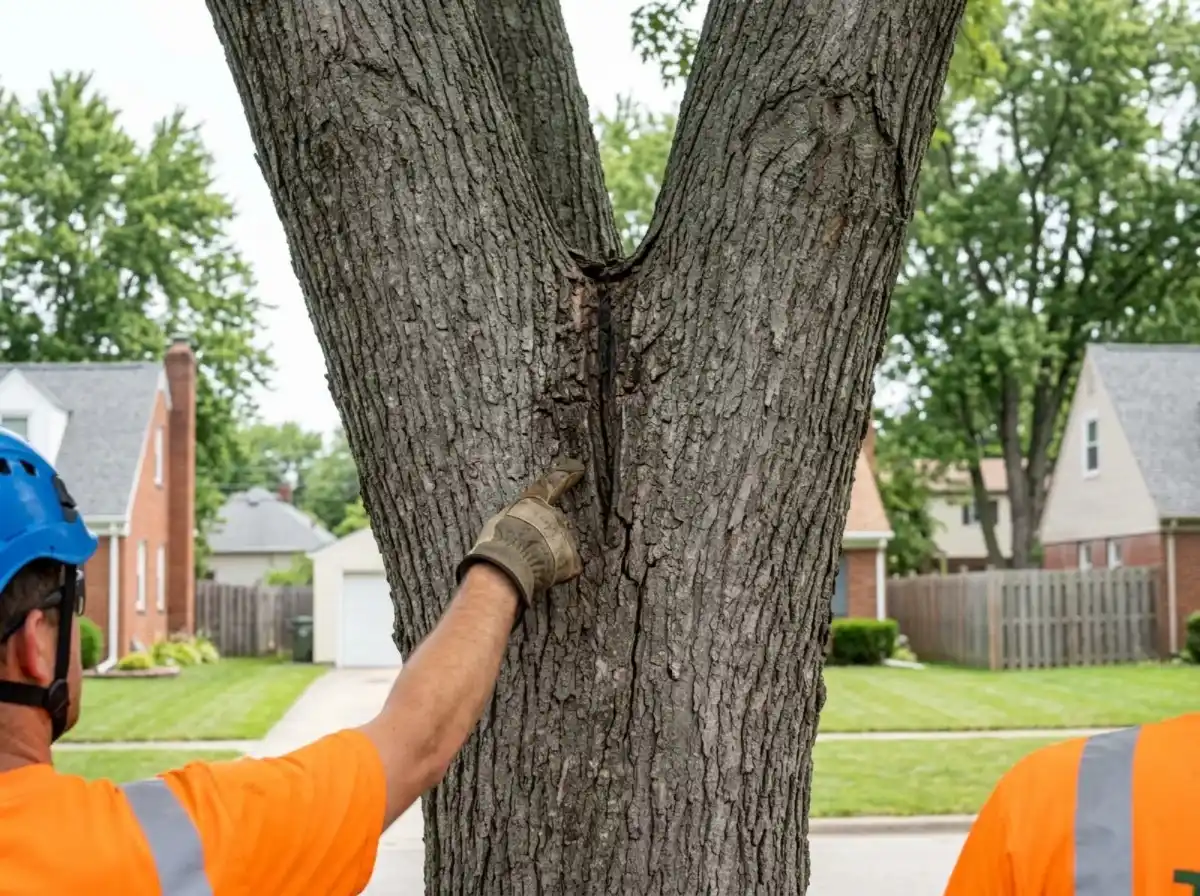
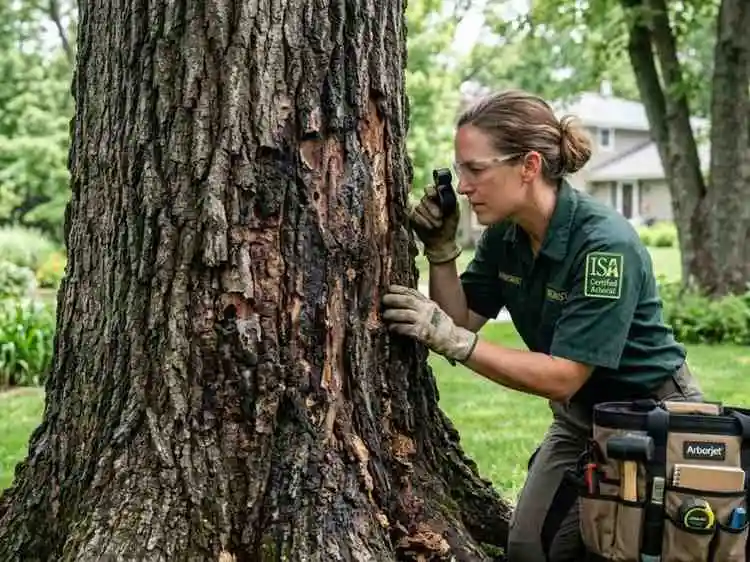
This is why a winter walk-through is worth more than a summer one. A proper tree risk assessment done with the leaves off will catch things that simply are not visible in August, and it gives you the whole dormant season to act on what it finds.
2. The things that infect fresh cuts are not flying
A pruning cut is an open wound. In the warm months, central Ohio has insects that find those wounds and carry disease into them. The clearest case is oak wilt, spread by sap-feeding nitidulid beetles — picnic beetles — that are drawn to the smell of a fresh cut. Ohio State’s own research puts the attractive period at roughly three days after the cut is made.
In February, those beetles are not active. The wound closes over the winter and the tree is well into compartmentalising it before anything is flying. We covered the oak wilt question in detail in our piece on when it is actually safe to prune an oak in central Ohio, including the places where Ohio’s own publications disagree with each other.
3. The ground is hard
This one is unglamorous and it matters more than people expect. Chippers, lifts and loaded trucks on soft spring turf leave ruts and compacted soil, and compacted soil is a slow problem for the roots underneath it. Frozen or firm winter ground takes the weight without the damage.
The one date that changes everything: 15 April
If you have an oak, the dormant window is not a preference. It is close to a rule.
Ohio State Extension’s oak wilt fact sheet (PLPATH-TREE-02) sets the high-risk period for wounding oaks at 15 April through 1 July, with a more cautious recommendation from the university’s Buckeye Yard and Garden Line extending that to 15 October. The safe dormant window it gives runs from 1 November to 1 April.
The number most websites get wrong
Search for this and you will mostly find “15 April to 15 July.” That figure is real, but it is Michigan’s. Ohio’s own number ends on 1 July. It is a small difference until you are the one deciding whether a July oak job is sensible, at which point it is two weeks of your life.
And the exception nobody mentions
Every arborist is taught the same thing: never paint a pruning wound. Wound dressings trap moisture and slow the tree’s own sealing process.
Ohio State makes one deliberate exception. If an oak is wounded during the risk season — storm damage, a car, a cut that could not wait — they recommend covering it with latex paint immediately. Not to help the tree heal, but to stop the wound smelling like dinner to a beetle. It is one of the few places in tree care where the textbook answer is the wrong one.
What the work actually involves
“Pruning” covers several different jobs, and in the dormant season most of them get easier.
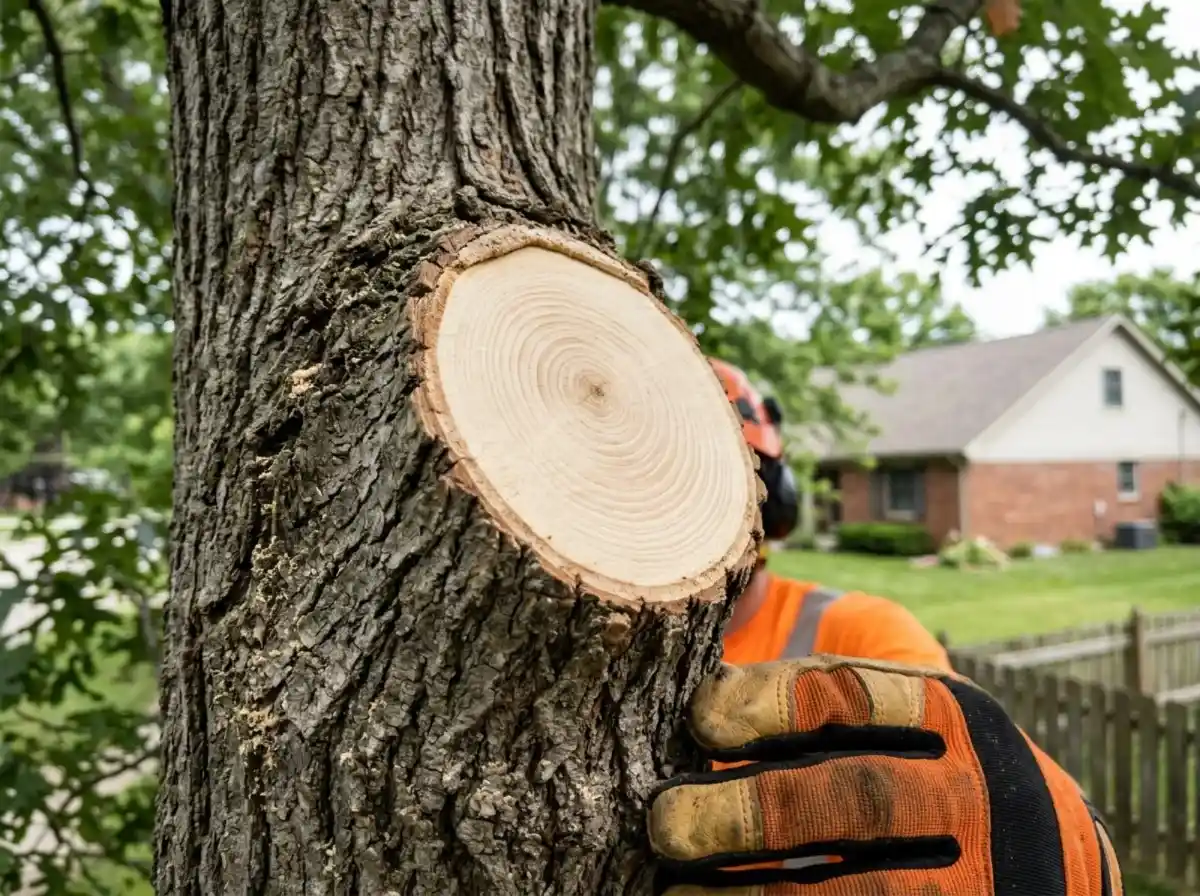
Deadwooding — taking out limbs that have already died — is the one job where winter is unambiguously better, because dead wood is easiest to identify when the living wood is also bare. There is no guesswork about whether a branch is simply late to leaf out.
Crown reduction on a large shade tree is a shaping decision, and shaping decisions are better made when you can see the whole frame. The same goes for structural work on younger trees, where a few well-chosen cuts now prevent the co-dominant stem problem fifteen years from now.
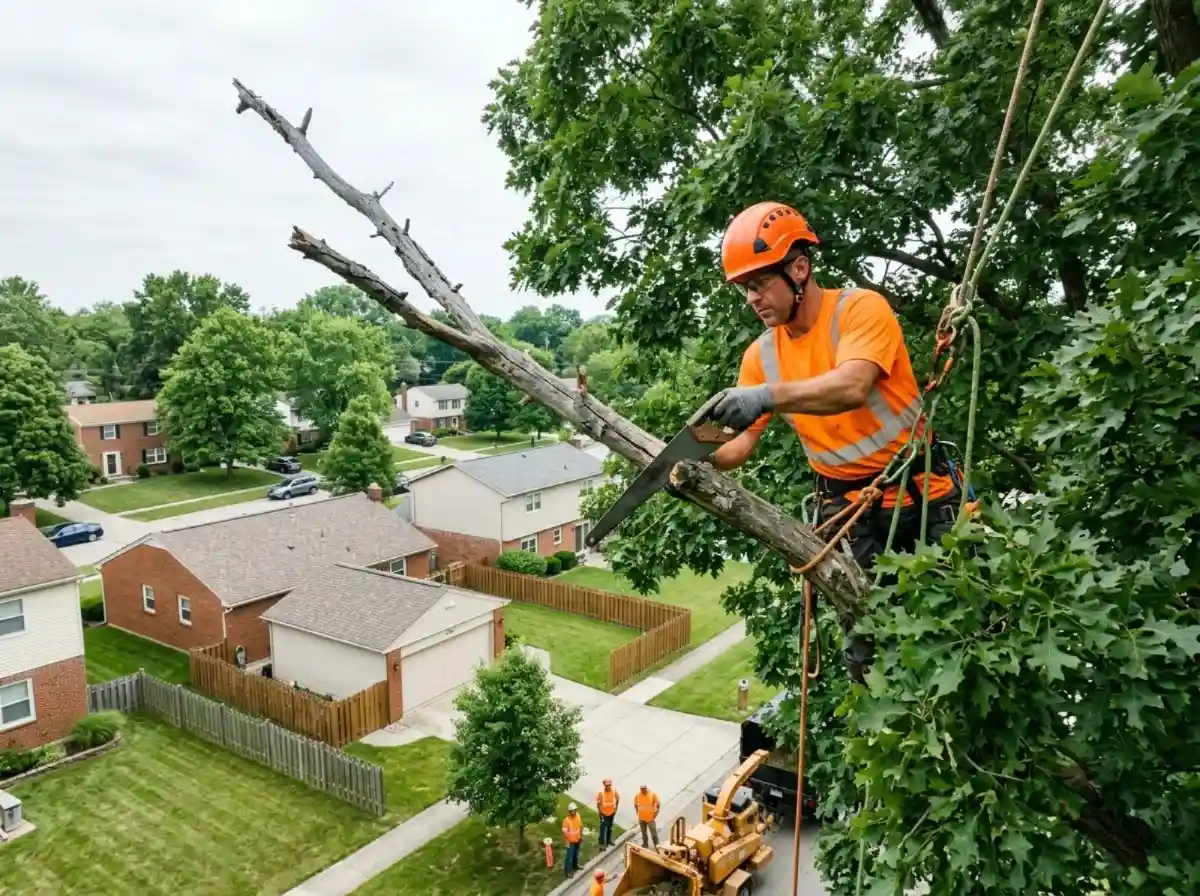
Routine tree trimming for clearance — off the roof, off the driveway, away from the service drop — can be done most of the year, but it is cheaper and cleaner to batch it with the rest of the dormant work rather than calling someone out twice.
Columbus suburbs still carrying August damage
There is a specific reason this winter matters more than most here.
On 11 August 2026 a derecho crossed central Ohio. The National Weather Service recorded an 82 mph gust at John Glenn Columbus International Airport and 70 mph at OSU Airport, and confirmed nine tornadoes across the warning area, three of them in Franklin County. The heaviest tree damage ran through Upper Arlington, Hilliard, Dublin and Reynoldsburg.
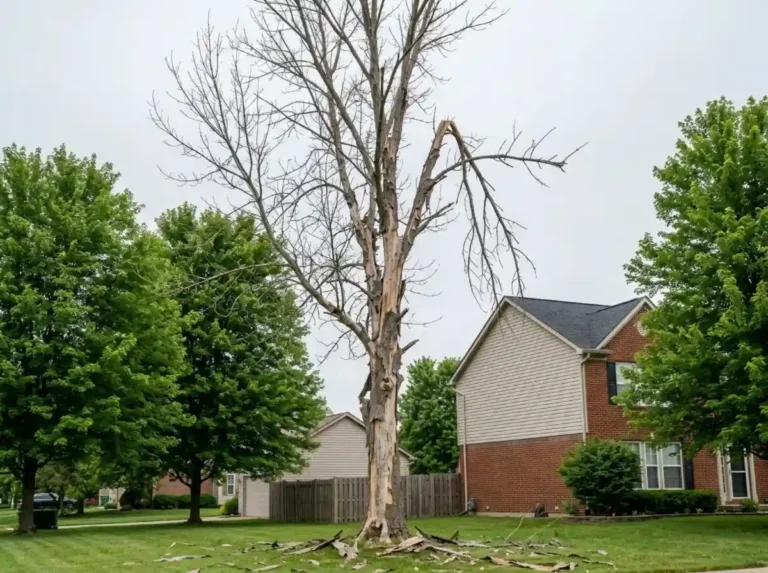
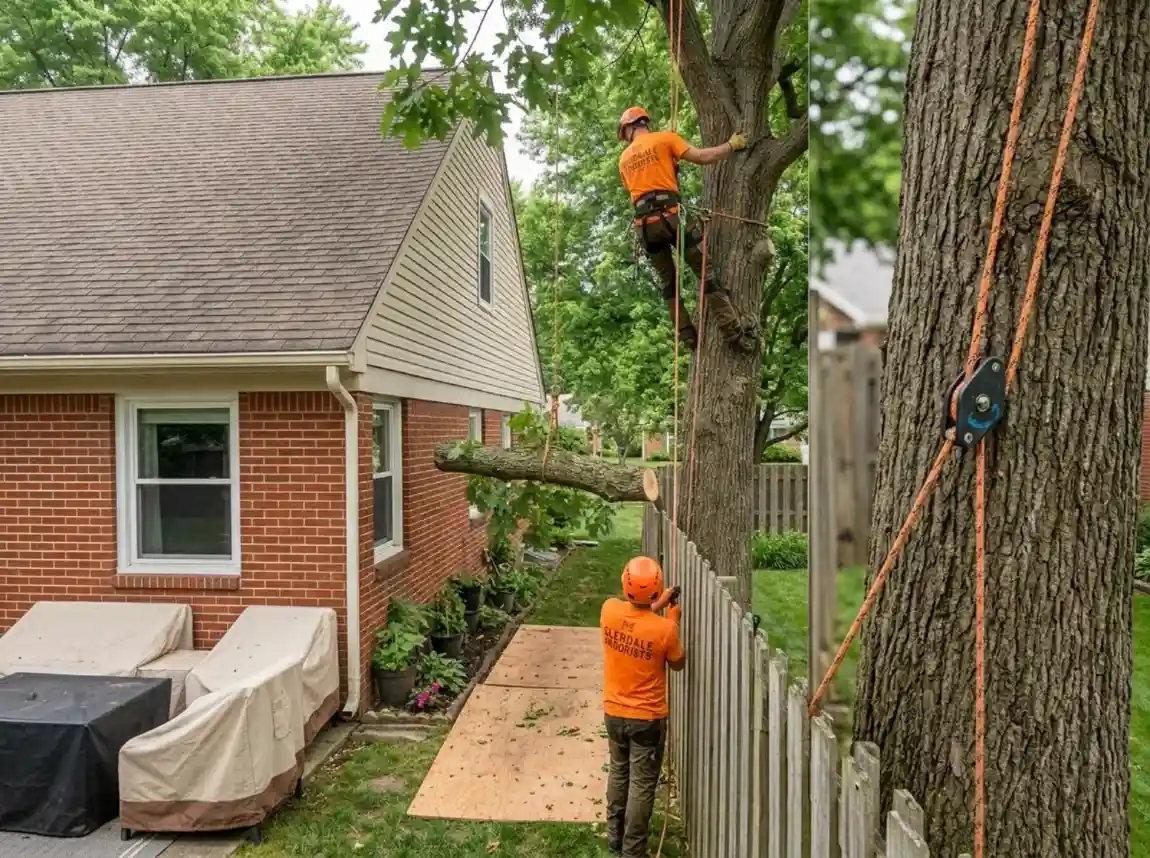
What got cleared in August was what had fallen. What did not get cleared is the rest: torn limbs left hanging, branches cracked at the union but still attached, trees that lost a third of their crown on one side and are now lopsided going into a winter of snow load. Those are dormant-season jobs, and they are sitting in back yards across those four suburbs right now.
It is also worth remembering that central Ohio’s storm risk does not politely wait for summer. On 28 February 2024, eight tornadoes touched down across the region in a single night, including an EF1 at Hilliard. A damaged limb that survives January is not necessarily going to survive February.
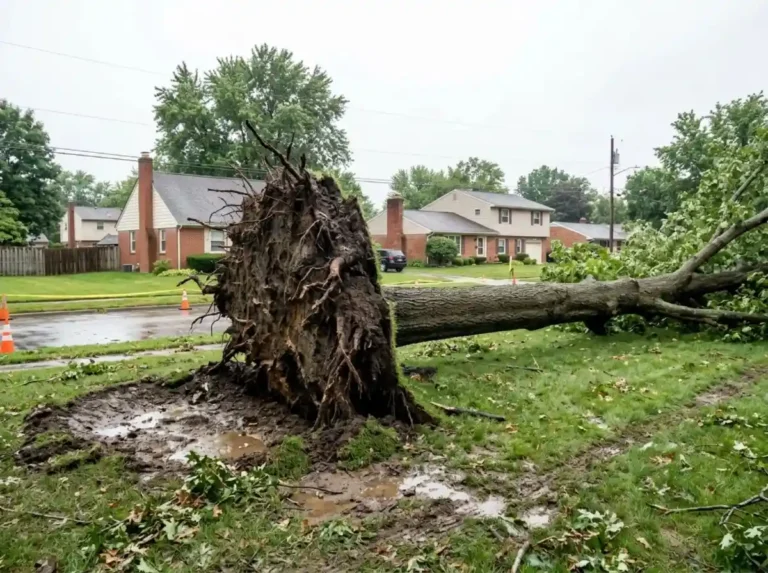
If something is already hanging, that is not a pruning conversation. We wrote separately about why central Ohio trees uproot rather than snap, and anything actively unsafe belongs with emergency tree service rather than a scheduled visit.
The part that surprises people: the brush
Homeowners who prune their own trees in Columbus usually discover the real problem after the cutting is done.
The City of Columbus yard waste rules are specific. Branches must be under four inches in diameter and under four feet long, bundled and tied, under two feet wide, and under fifty pounds. Plastic bags are not permitted, not even as a liner. Burning the pile is prohibited — and a contractor cannot legally take your brush somewhere else and burn it either.
Four inches is not a large branch. Anything from a mature maple or oak that was genuinely worth removing is almost certainly thicker than that, which means the city will leave it at the kerb. That single rule is behind a large share of the calls we take. We went through the disposal question in more detail in our piece on where central Ohio storm debris is actually allowed to go.
One more thing the city states plainly on its own property damage page: damage entirely on private property is the responsibility of the property owner and their insurance carrier. The 311 line covers public right-of-way. The tree in your back garden is yours — a point we unpacked in who is responsible for the tree in your tree lawn.
What not to expect from winter pruning
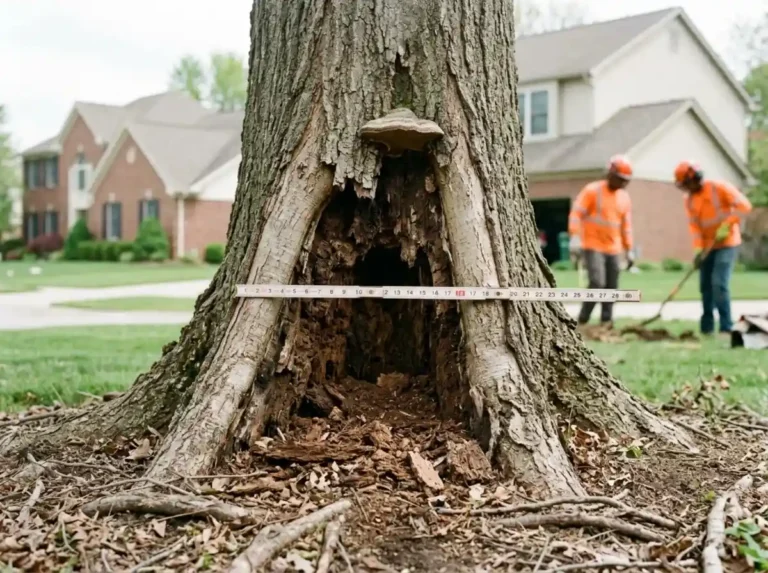
Dormant pruning is not a cure. It will not fix a tree that is structurally failing, and it will not reverse decay that has already hollowed a trunk. Where a stem has been lost or a union has already split, the honest options are cabling and bracing or removal, and no amount of shaping substitutes for that assessment.
It is also worth knowing that a few species — maple, birch and walnut among them — bleed sap heavily if cut in late winter as the sap starts moving. The general horticultural view is that this is cosmetic rather than harmful, but if it bothers you, those trees are better done in late autumn or early winter than in March.
And one small local curiosity that generates a surprising number of December phone calls: oaks and beeches hold their dead leaves through the winter. The tree is not sick. That is simply what those species do.
A working calendar for central Ohio
| Window | What it is good for |
|---|---|
| November – December | Dormant season opens. Best stretch for maple, birch and walnut. Storm-damaged limbs cleared before snow load. |
| January – February | Deepest dormancy. Structure fully visible. Oaks safely in their window. |
| March | The strongest month — still dormant, but close enough to spring that wounds begin closing quickly. |
| 1 April | Ohio State’s safe oak window closes. |
| 15 April – 1 July | High-risk period for wounding oaks in Ohio. Avoid cutting them. |
If you are reading this in November, you have the whole window ahead of you. If you are reading it in late March, the oak work needs deciding this week.
What we could not confirm
In the interest of not presenting guesses as facts:
- We could not verify month-by-month ice storm frequency for central Ohio. The commonly repeated claim that January and February are the peak for ice damage here is not something we were able to substantiate from a primary source, so we have not made it.
- Columbus yard waste collection season dates, and whether collection is weekly or fortnightly at a given time of year, were not confirmed. Check with the city before planning around them.
- We found no evidence of a separate municipal leaf-vacuum programme in Columbus and are not claiming one exists.
- Whether a permit is required to remove a street tree was not confirmed.
- The sap-bleeding note for maple, birch and walnut reflects general horticultural practice rather than an Ohio-specific published source.
Booking the work
Winter is the quiet half of the year for tree companies in central Ohio, which is the practical argument for using it. Schedules are open, crews are not running between storm jobs, and the work gets the time it deserves.
If you want an opinion on what a particular tree needs before the window closes, our tree pruning page covers how we approach the work across Columbus and the Franklin County suburbs, including Worthington, Whitehall, Westerville and Gahanna.
Call (614) 259-1714 and ask for a dormant-season walk-through. It takes twenty minutes and it is the cheapest look you will get at what your trees are actually doing.
Sources
National Weather Service, Wilmington Ohio — spring and autumn frost/freeze climatology, 1991–2020 normals, and the 11 August 2026 derecho and 28 February 2024 tornado outbreak summaries. Ohio State University Extension Ohioline, fact sheet PLPATH-TREE-02 (oak wilt) and the Buckeye Yard and Garden Line. City of Columbus, yard waste collection requirements and property damage guidance.