Emerald Ash Borer in Franklin County: Two Decades On, What Is Left to Deal With
The emerald ash borer was first detected in Ohio in February 2003, in Lucas County near Whitehouse, where roughly 200 ash trees were found infested. In that same detection year it was also confirmed in Franklin County — 15 trees in Columbus. The Ohio Department of Agriculture destroyed around 4,000 trees before May of that year and placed a quarantine on ash trees, logs, lumber, bark, chips and firewood from infested areas.
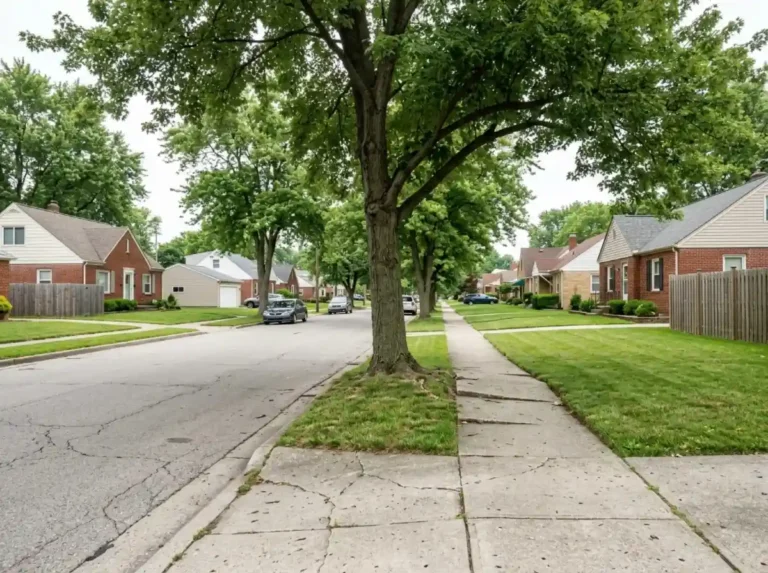
That was more than two decades ago. It matters because it changes what an ash tree in your yard in 2026 actually is.

The scale of what was lost
Ohio State University’s Department of Plant Pathology has put the standing ash timber value in Ohio alone at over $1 billion, with projected economic impact to urban forests in the range of $10–20 billion. Ash was a default street and yard tree across central Ohio for decades, which is exactly why the loss was so visible.
What we are usually called about now
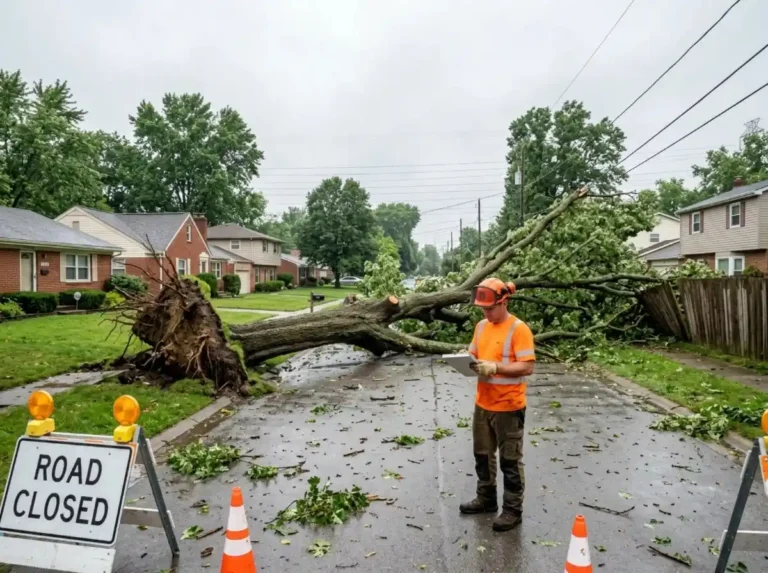
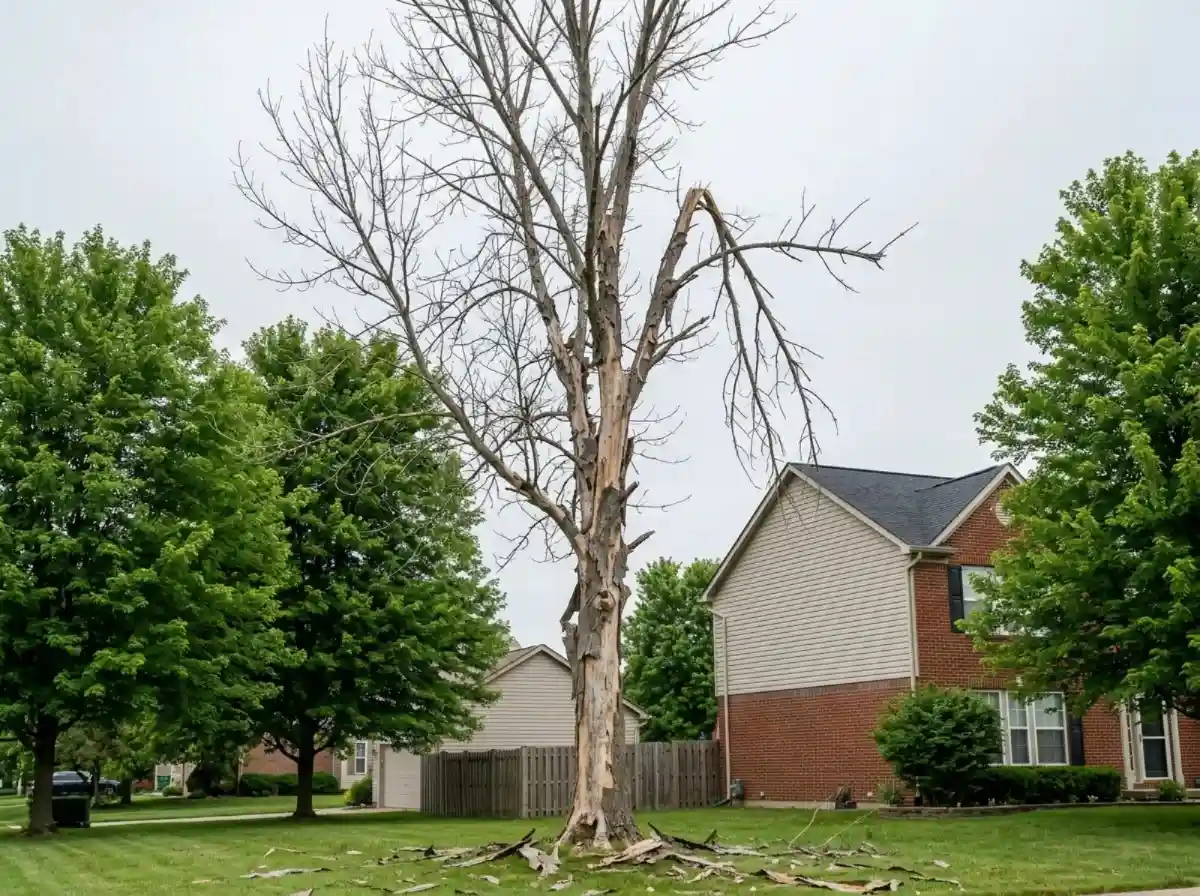
Very little of our ash work today is treatment. Most of it is removing trees that died years ago and were left standing. A long-dead ash is not the same job as a live tree removal, and the difference is a safety one.
- Dead ash goes brittle unusually fast. Limbs that look solid shear without warning under a climber’s weight.
- The bark sloughs, which removes the visual cues a climber uses to judge sound wood.
- Standing dead ash is frequently a crane or bucket job rather than a climb, because putting a person in it is not a reasonable risk.
- The longer it stands, the more expensive it gets — the opposite of most tree work.
How to tell what you are looking at
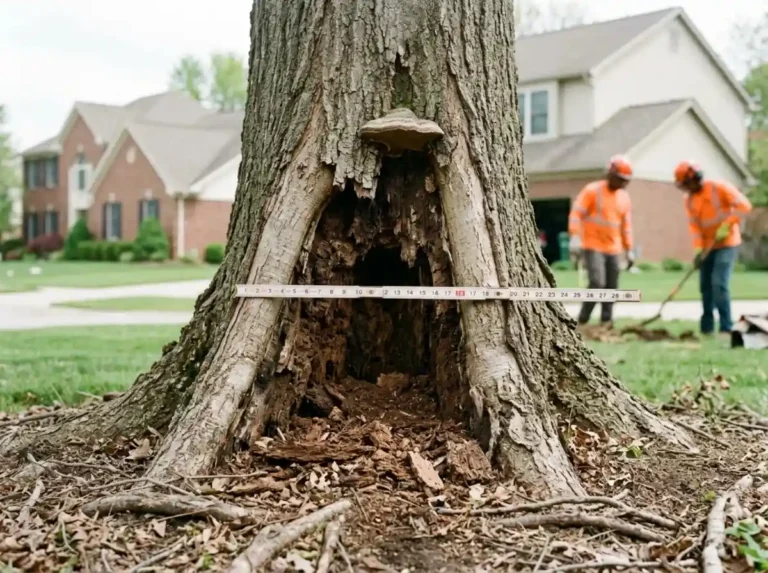
On a live tree, the early signs are thinning in the upper canopy, epicormic shoots low on the trunk, D-shaped exit holes about an eighth of an inch across, and heavy woodpecker activity stripping bark to get at larvae. On a dead one, the give-away is bark falling away in sheets and the S-shaped galleries scored into the wood underneath.
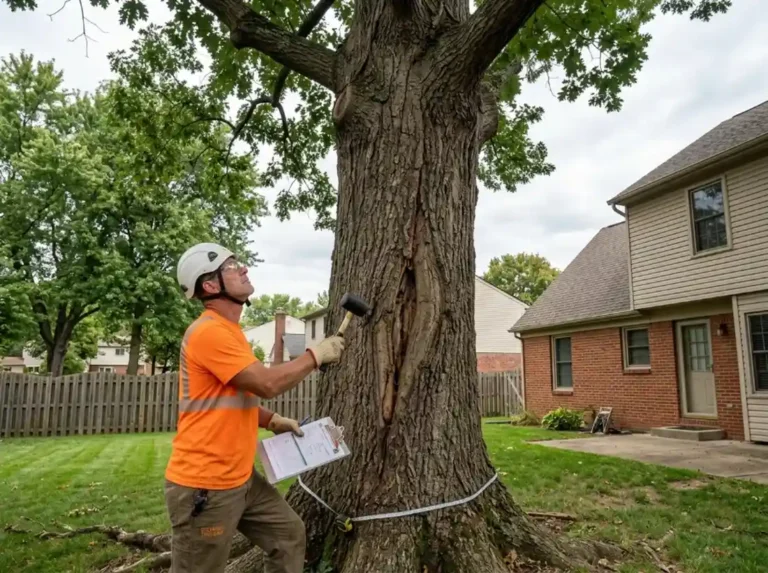
If you have an ash that is still alive and healthy in central Ohio in 2026, it has either been treated or it has been lucky. Either way it is worth a professional look — our tree health care service covers diagnosis and treatment, and a risk assessment will tell you honestly whether treatment is still worth the money.

Do not move the firewood
If an ash comes down on your property, keep the wood local. Moving untreated ash firewood is how the beetle covered the distance it did, and Ohio quarantine rules exist for exactly that reason. We take the wood with us as part of removal, and grind the stump in the same visit. Call (614) 259-1714.
Ready to Get Rid of That Stump?
BuckeyeTree Pro — 4466 Morse Rd, Columbus, OH 43230
📞 Call (614) 259-1714 Now