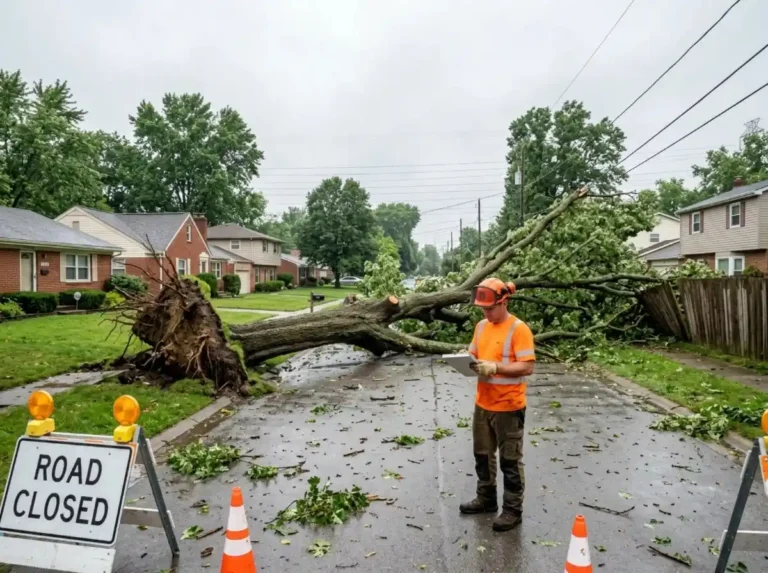
Who Is Responsible for the Tree in Your Tree Lawn? It Depends Which Side of the Line You Live On
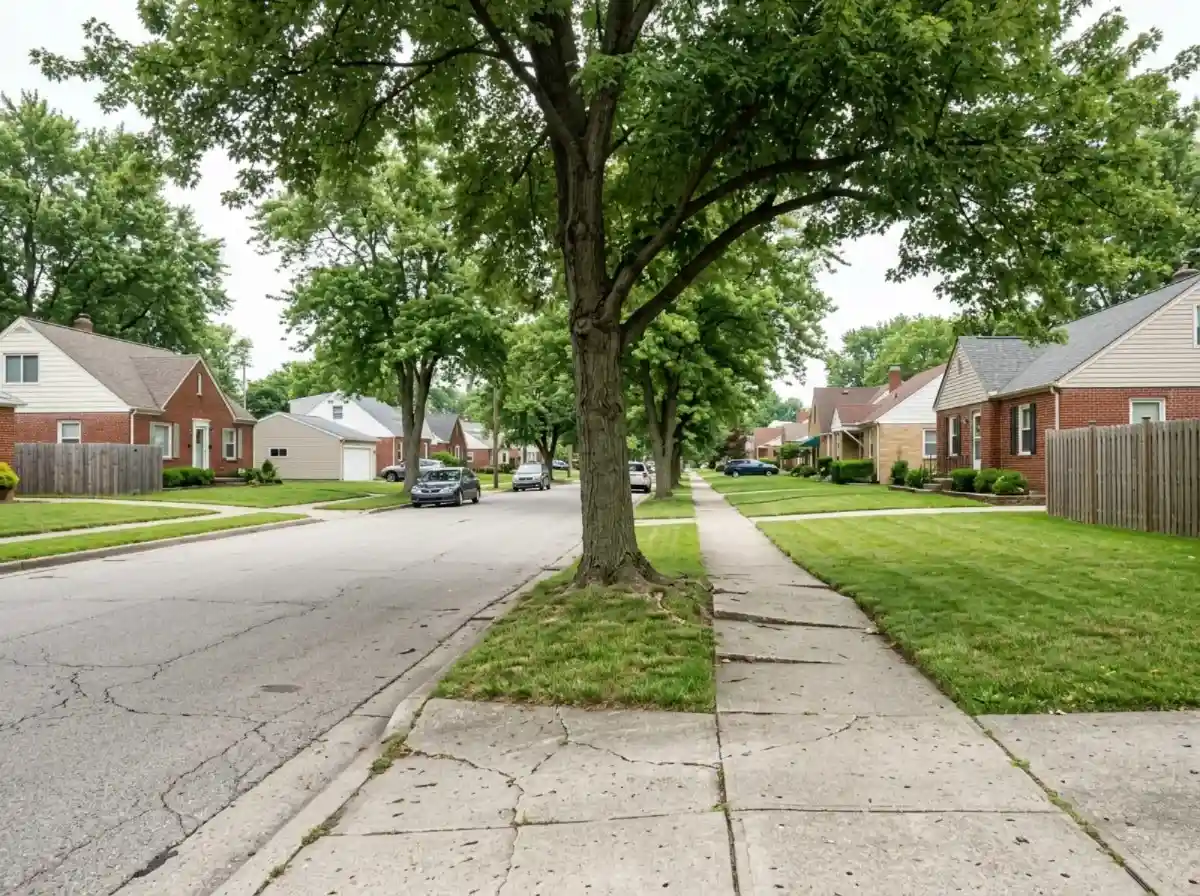
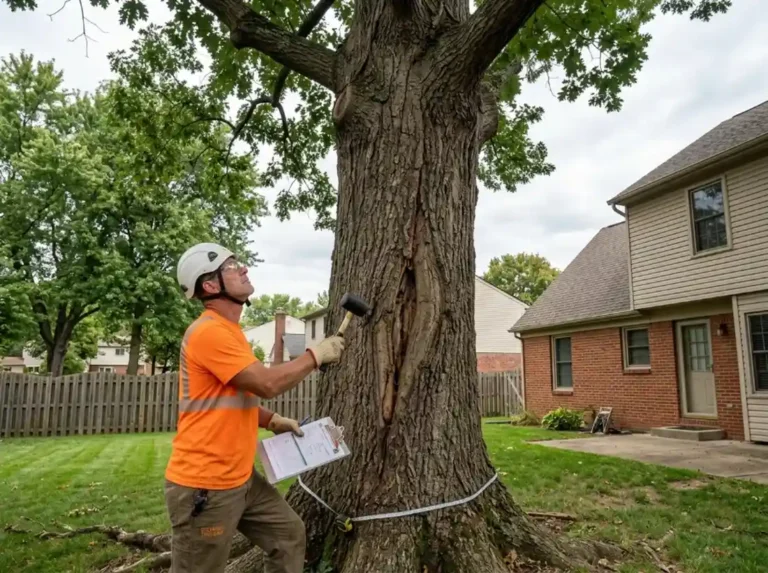
One of the most common questions we get is also one of the hardest to answer in a sentence: who is responsible for the tree between the sidewalk and the street? Around Columbus the honest answer is that it depends on the municipality, and sometimes on which side of a street you live on.
Your mailing address is not your municipality
ZIP 43085 is the clearest example. Roughly 70% of it is the City of Worthington, about 26% is Columbus, and around 2% is the separate incorporated village of Riverlea. Several named areas — Worthington Hills, Sharon Hills, Mt. Air, and the Flint Road and Park Road area — carry a Worthington mailing address but sit in unincorporated Sharon Township, where fallen trees in the right-of-way are handled by the Township Road Department rather than the city.

So two homeowners with what looks like the same address can have completely different answers about who removes a fallen limb, who prunes the street tree, and who pays.
Some cities prune your street trees for you
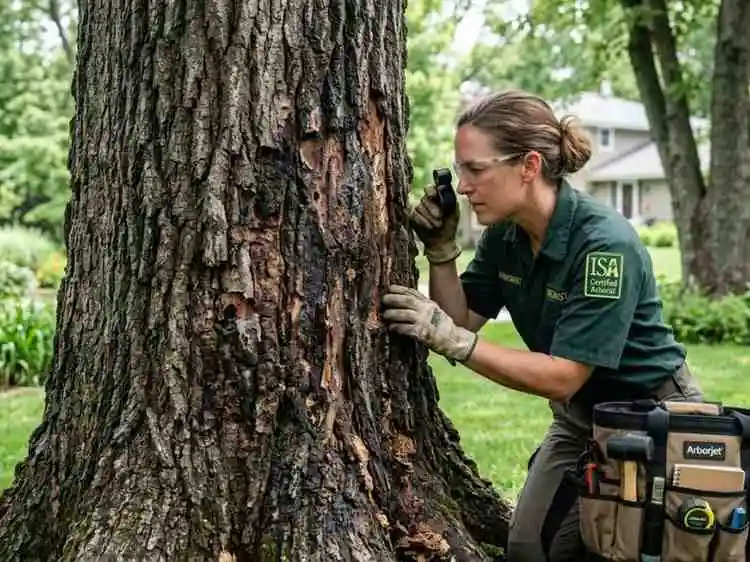
Worthington prunes its street trees on a five-year cycle at no charge to the homeowner, and runs a street tree programme in which the resident pays $90 toward a tree and the city covers the balance and the planting, with an 18-month guarantee. Species are recommended by the city’s Arbor Advisory Committee, and the city employs certified arborists who will advise on placement.
That is genuinely useful, and it means some of the work people call us about does not need a contractor at all. We would rather tell you that than sell you a job the city will do for free.
The debris rules are where the money is
This is the part that changes a quote. Municipal yard waste collection is normally limited by bundle size and branch diameter — in Worthington, brush must be tied in bundles no larger than 4 ft by 2 ft with branches 2 inches or less in diameter, and the collection guidelines explicitly exclude materials from tree removal services.

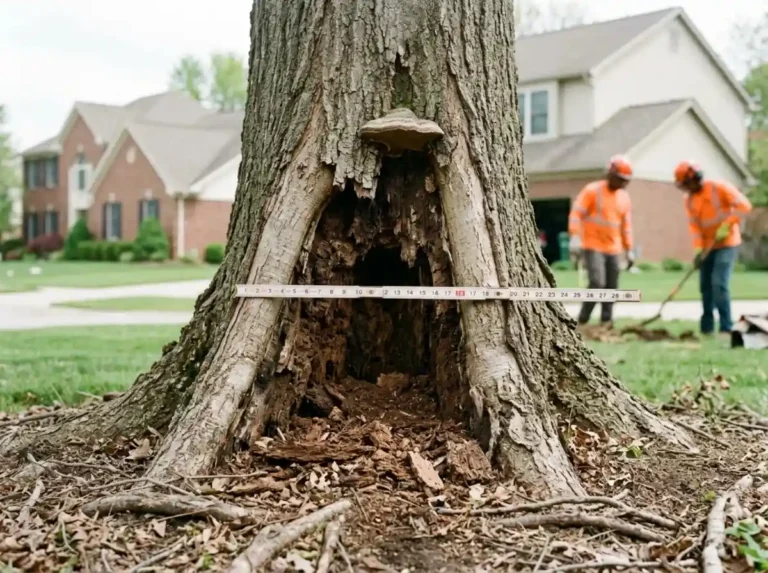
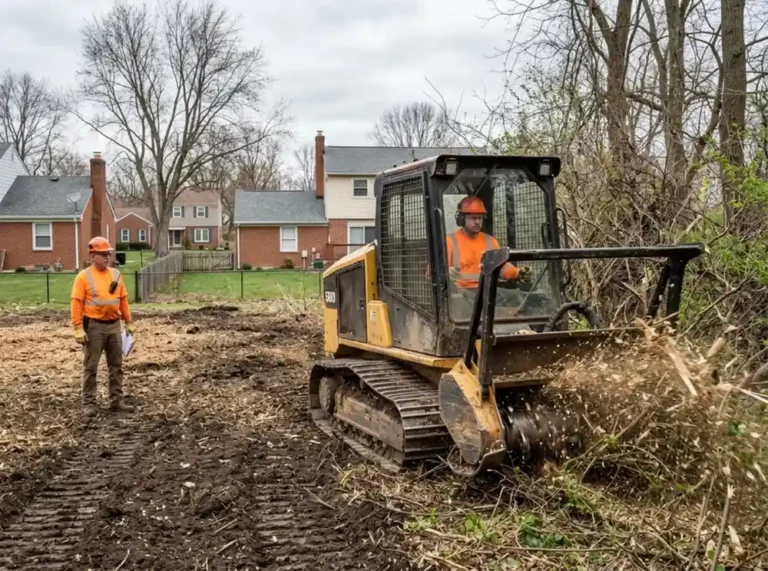
Read that again, because it is the single most useful fact for anyone planning a removal: the wood from a real tree removal is exactly what the municipal system will not take. Light pruning you can often bundle yourself. A removal generates trunk wood and volume that has to leave on a truck, and it should be priced into the job from the start rather than appearing as a surprise at the end.
And the power lines are a separate authority again
AEP Ohio operates a four-year clearing cycle on its distribution lines and states that trees growing directly under or near its lines may be removed rather than trimmed. For the service line running from the pole to your house, the utility generally removes only branches growing on or through the wires. In both cases, debris is treated as the property owner’s responsibility. Never attempt to trim near an energised line yourself.
What to check before you book anyone
- Are you inside the city limits or in a township? It changes who handles right-of-way trees.
- Is the tree in the tree lawn or on your property? If it is in the right-of-way, call the municipality first.
- Does your city collect brush, and what are the size and diameter limits?
- Is the contractor carrying liability insurance and workers’ compensation, and will they show you the certificates?
- Are you being asked for payment up front? Established contractors do not need it.
We check the jurisdiction before we quote, on every job. If you want to know where you stand, call (614) 259-1714 with your cross street. You can also see every area we cover or browse all our services.
Ready to Get Rid of That Stump?
BuckeyeTree Pro — 4466 Morse Rd, Columbus, OH 43230
📞 Call (614) 259-1714 Now